
Match the filler to your product
Thin, free-flowing liquids (water-like) suit overflow or gravity fillers. Medium-viscosity products (lotions, syrups, oils) suit piston or pump fillers. Pastes and creams need a piston filler with a suitable nozzle. Getting this match right is the single most important decision — it drives fill accuracy and speed.
Foaming products, particulates (bits/pieces) and hot-fill all change the specification, so describe your product honestly when asking for a quote.
Container handling and speed
Rotary turntable lines are compact and flexible for small-to-medium output; inline conveyor lines scale to higher speeds. Consider your container’s stability, neck finish and label area, and whether you run one format or many.
Specify realistic bottles-per-minute at your actual fill volume — headline speeds are usually quoted for small fills.
Capping and closures
Closure type dictates the capping head: screw caps, ROPP, press-on, trigger sprayers and pumps each need different handling. Cap feeding (elevator or vibratory sorter) and torque control matter for a reliable seal. Confirm all the closures you run so the line handles each.
Single machine or turnkey line
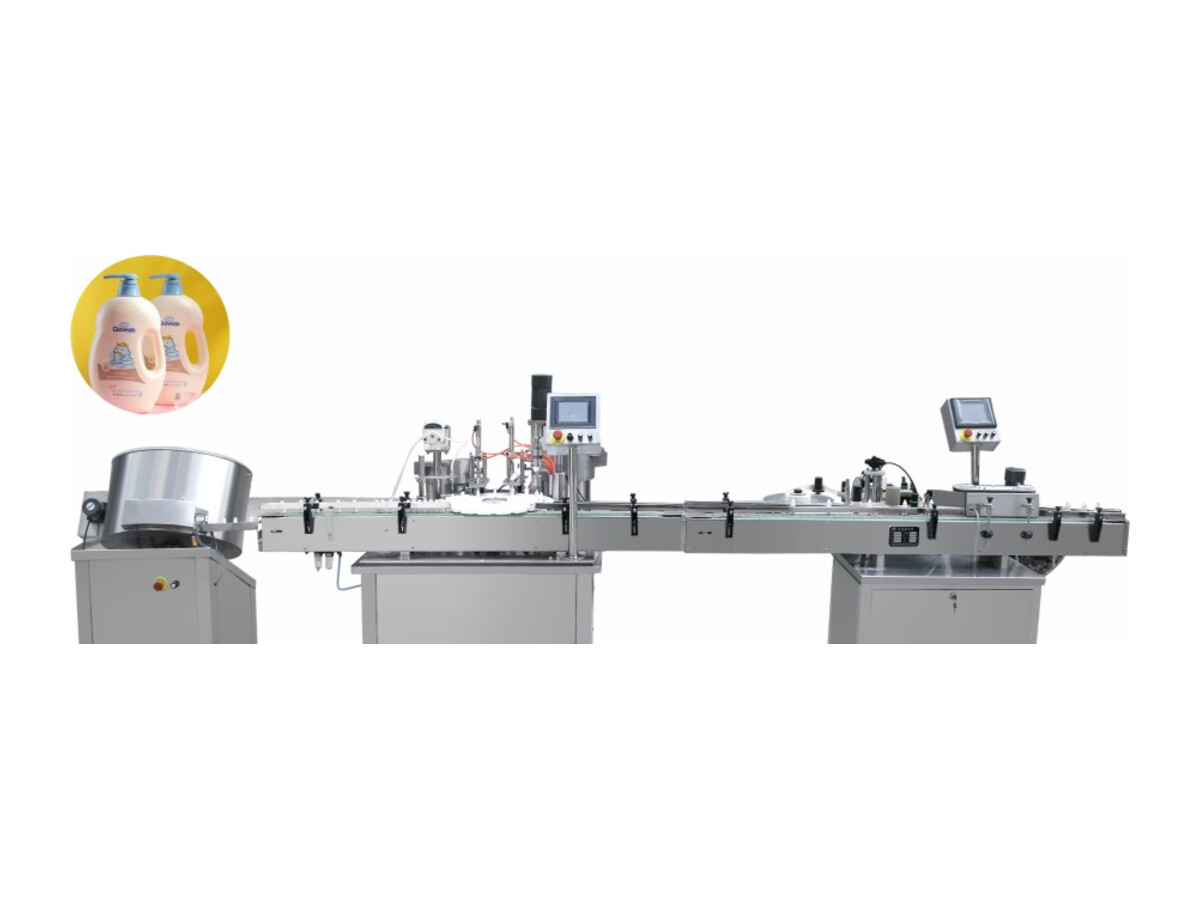
You can buy a standalone filler and add capping/labelling later, or specify a complete integrated line — unscrambler, filler, capper, labeller and coder — designed, installed and commissioned as one. A turnkey line removes integration risk between machines from different suppliers.