

Process · Buying guide

How to choose a mixer for powders and liquids

“Mixer” covers very different machines. The right one depends on whether you are blending dry powders or emulsifying liquids and creams, your batch size, and whether you need heating, cooling or vacuum. This guide maps the main types to the job.

Blending dry powders

For free-flowing powders and granules, tumbling blenders (V-type and 3D) give fast, gentle, segregation-free mixing and are easy to clean. A 2D mixer suits large volumes. For cohesive or viscous powders — or where you add a small amount of liquid — a ribbon mixer with its forced mixing action works better.

Choose by material behaviour first, then batch size: gentle tumbling for good flowers, forced ribbon action for sticky or poorly flowing blends.

Mixing and emulsifying liquids & creams

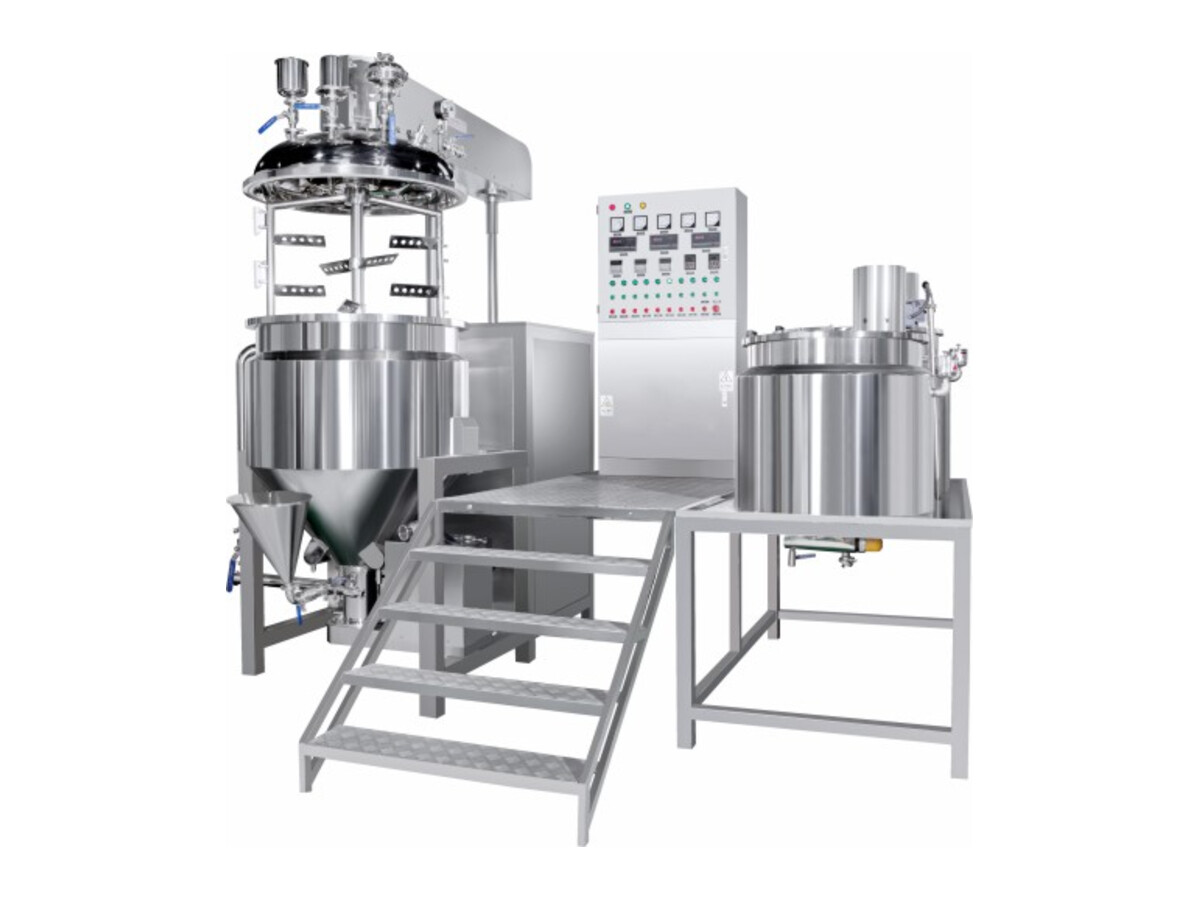
Creams, lotions, gels and ointments need shear to form a stable emulsion, not just stirring. A vacuum homogenising emulsifier combines a high-shear homogeniser, an anchor/scraper agitator, jacketed heating/cooling and vacuum de-aeration in one jacketed vessel — the standard for cosmetics and many pharma semi-solids.

Vacuum matters: it removes air so the finished cream is smooth and free of bubbles, and improves shelf appearance and stability.

Batch size, heating and hygiene

Size the vessel to your typical batch with headroom for agitation. Specify jacket heating/cooling if your process needs temperature control, and stainless-steel GMP-hygienic construction with CIP-friendly design for regulated products.
Frequently asked

Which mixer should I choose — V-type, 3D, 2D or ribbon?

Use a V-type or 3D mixer for fast, gentle, segregation-free blending of free-flowing powders, a 2D mixer for large volumes, and a ribbon mixer for viscous, cohesive powders or when adding small amounts of liquid. Choose by material behaviour first, then batch size.

What is a vacuum emulsifier used for?

A vacuum homogenising emulsifier makes stable creams, lotions, gels and ointments. It combines high-shear homogenising, scraper agitation and jacketed heating/cooling under vacuum, which removes air for a smooth, bubble-free finished product.

Why mix under vacuum?

Vacuum removes entrained air during mixing, producing a smoother emulsion without bubbles, better colour and appearance, and improved stability and shelf life — important for cosmetics and pharmaceutical semi-solids.

How do I size a mixer to my batch?

Match the working volume to your typical batch and leave headroom for agitation and expansion. Tell us your batch size, product type and whether you need heating, cooling or vacuum, and we will specify the vessel and drives.

Need help choosing?

Tell us your product — we'll specify the right machine.

Chat with us