

Pharmaceutical · Buying guide

How to choose a tablet press

A tablet press compresses powder or granule into tablets of consistent weight, hardness and thickness. Choosing the right one comes down to your target output, tablet size and shape, and how tightly you need to control weight and hardness. This guide walks through the decisions in plain English.

Single-station vs rotary presses

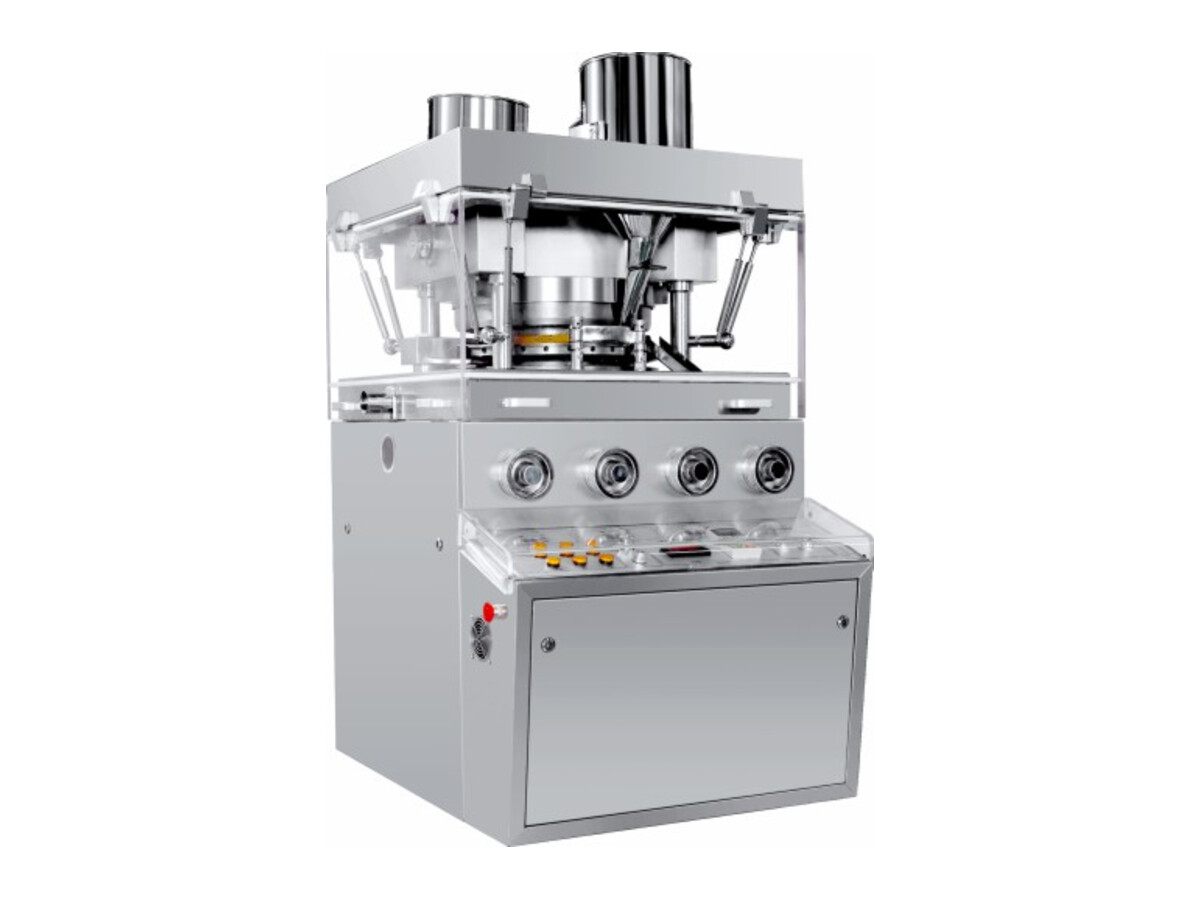
A single-station (eccentric) press has one set of tooling and is best for R&D, sampling and very small batches. A rotary tablet press carries multiple stations on a rotating turret, compressing many tablets per revolution — this is what almost all commercial production uses.

For most buyers moving beyond the lab, a rotary press is the right answer. The question then becomes how many stations and how fast.

Sizing output: stations and speed

Output is roughly the number of stations multiplied by turret speed. A press with more stations produces more tablets per hour at the same turret RPM, so match the station count to your daily and annual volume rather than over-buying speed you never use.

Leave headroom. Running a press comfortably below its maximum extends tooling life and keeps weight control tight, so specify a machine whose rated output is above your steady-state demand.

Tooling, tablet shape and changeovers

Tooling (punches and dies) defines tablet size, shape and any embossing. Standard round tooling is cheapest and easiest to source; shaped or scored tablets need bespoke tooling. If you run several products, factor in changeover time and keep tooling sets clearly identified.

Confirm the tooling standard (e.g. TSM/EU B or D type) up front so spares and replacements are easy to obtain later.

GMP, containment and documentation

For pharmaceutical and nutraceutical production, specify stainless-steel, GMP-hygienic construction, dust extraction, and CE or UKCA marking with a Declaration of Conformity. Ask for IQ/OQ/PQ validation support if you operate under a quality system.
Frequently asked

What is the difference between the ZP-31D and ZP-41D?

Both are rotary tablet presses in the same series; the number indicates the station count (roughly 31 vs 41 stations). More stations means higher output at the same turret speed, so the ZP-41D suits higher volumes while the ZP-31D suits smaller batches or a wider changeover mix. Tell us your target tablets-per-hour and we will size it.

How many tablets per hour can a rotary press produce?

Output depends on station count and turret speed and ranges widely — from tens of thousands to several hundred thousand tablets per hour. Size the machine to your steady-state demand with headroom rather than to its maximum rating.

Can a tablet press be validated to GMP?

Yes. Presses can be supplied in GMP-hygienic stainless steel with CE/UKCA marking, a Declaration of Conformity and technical file, and IQ/OQ/PQ validation support where required.

Do I need a granulator before the tablet press?

Often, yes. Granulating powder improves flow and compressibility, giving more consistent tablet weight and hardness. Poorly flowing powders can be direct-compressed, but many products run better through a granulator and dryer first.

Need help choosing?

Tell us your product — we'll specify the right machine.

Chat with us